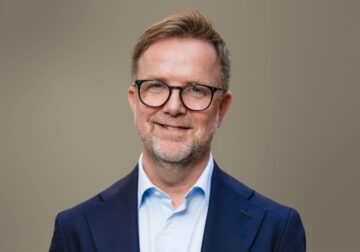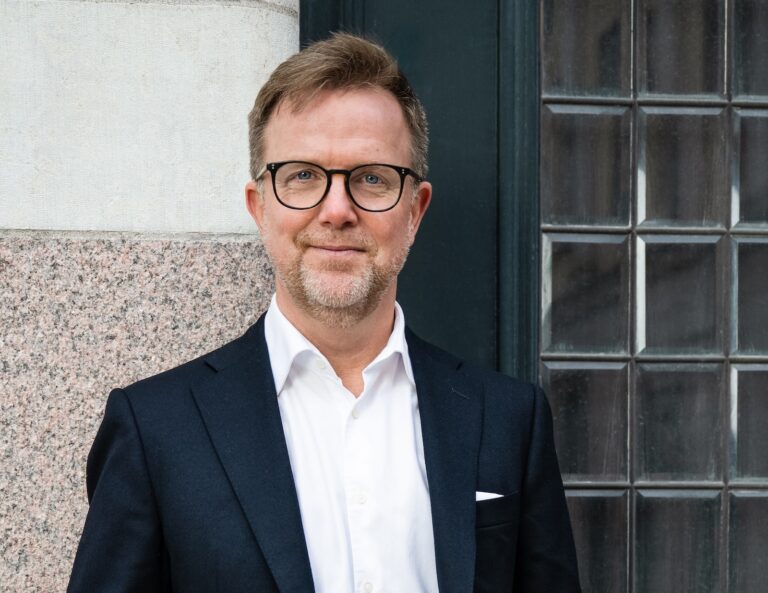
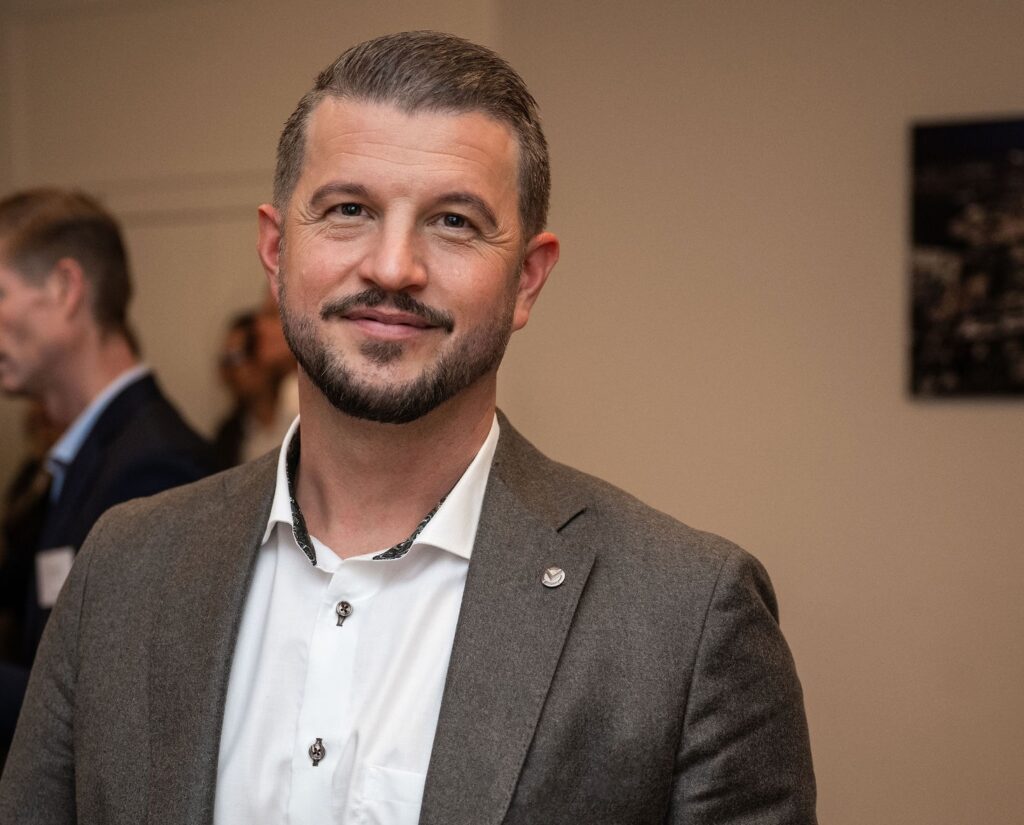
Stefan Aspman on leadership, strategy and the CEO transition
- 14 juli 2026
- Intervju
From business leader to CEO
You are stepping into the CEO role after several years in senior leadership positions within Munters. What are you most looking forward to, and what do you think will be the biggest shift for you personally as you move from senior business leader to CEO?
What I’m most looking forward to is broadening my perspective again. I started at Munters working across the full group on commercial excellence, and what struck me then was the depth of engineering capability and domain expertise across very different businesses. After four years deeply focused on the data center space, I’m genuinely excited to reconnect with that breadth – and to keep learning from colleagues across the group.
I’m also looking forward to working with my former team from a different angle, seeing them grow and perform without me being in the operational details day-to-day.
Moving from owning a business to leading the system
I think the biggest shift is moving from owning a business to leading the system. As a Business Area President, you are directly accountable for a defined set of factories, teams and customers. As CEO, you have none, or all, depending on how you look at it. The role becomes much more about setting direction, shaping context, and ensuring others can succeed.
For me personally, with a fairly entrepreneurial profile, that’s a real shift. I naturally like being close to the business. But I don’t believe in becoming distant. I believe you can’t really manage what you never touch. So the challenge, and opportunity, is to strike the right balance: staying sufficiently close to reality, while keeping the focus on long-term direction and overall performance.
The challenge, and opportunity, is to strike the right balance: staying sufficiently close to reality, while keeping the focus on long-term direction and overall performance.
Strategy is about choices
As CEO, one of the most important responsibilities is deciding where to play and how to win. Many leaders spend significant time developing strategy, but execution is often where success is determined. How do you approach strategy work? And what have you learned about turning strategic ambition into action and results?
To me, strategy is about choices – a verb backed by an argument. It’s not a vision statement, broad ambitions, or a list of initiatives. It’s a small number of clear, and sometimes uncomfortable, choices. It’s about trade-offs, resource allocation, and being very concrete about where we have the right to win, always in the context of the customer’s alternatives. It’s a Dragons’ Den mindset. Why would anyone invest in this, choose us over the alternatives, or join what we are building?
Those choices also need to go beyond the here and now. The harder part of strategy is to think in scenarios with moving parts – how the market will evolve and how competitors will respond to what we do. That “looking around corners” is difficult, but essential, because strategy is not about operating in a fixed setting, but about defining a winning approach in a system that is constantly moving.
Strategy is not about operating in a fixed setting, but about defining a winning approach in a system that is constantly moving.
Making strategy real
I’ve seen many companies struggle in turning this into action. Strategy becomes a narrative, while execution becomes a set of activities, and the link between the two is weak. When everything that sounds like “strategy” gets blended, execution suffers – because the organization interprets the direction in different, sometimes even conflicting, ways. A common big corporate disease.
What I’ve learned is that strategy only works if it has very concrete implications: what we stop doing, where we shift resources, what capabilities we build, and what we measure differently. If those implications are not explicit, the organization defaults back to what it was already doing.
I also try to speak about strategy in the same way to the shop floor as I do to the Board. And if it doesn’t translate, it’s usually not clear enough.
Execution, in that sense, becomes the test of whether the strategy is real. Someone told me early in my career that “planning without execution is hallucination,” and I’ve found that to hold true.
Insights from the Novare Executive Program
The Novare Executive Program is built around the idea of looking up, looking out and looking in. When you reflect on your time in the program, what perspective or insight has stayed with you the most? And how has it influenced the way you lead today?
Looking up, looking out and looking in is a useful way to frame strategy and transformation. And ultimately, transformation is driven by people. How you mobilize change, build trust and create alignment determines whether strategy becomes reality.
For me, that’s why the most lasting insight from the program came from the leaders we got to meet and listen to.
Whether it was Micael Bydén, Sofia Svingby, Per Öhagen or Marcus Wallenberg, what struck me was how consistent they were in how they showed up; humble, values-driven, servant-oriented, yet very clear and distinct. Despite their positions and achievements, they were approachable, plainspoken and genuinely open in discussion.
That reinforced something I strongly believe, that trust is the key currency in leadership – built through clarity, integrity, and how you engage with people day-to-day.
It has influenced how I think about my own leadership. It’s not just what you do, but how you show up and are perceived by others.
For me, that’s why the most lasting insight from the program came from the leaders we got to meet and listen to. What struck me was how consistent they were in how they showed up; humble, values-driven, servant-oriented, yet very clear and distinct.
Continuous learning as a leadership discipline
Leadership today requires continuous learning, regardless of experience or position. How do you make sure you keep challenging your own assumptions and developing as a leader?
One of my most effective ways to keep learning is simply to stay curious, about the people I work with and the processes I am part of. Asking all those “stupid” questions is often where your assumptions get challenged.
I think “what if I’m wrong?” is an underestimated question among leaders.
I’ve also been inspired by my former manager at Sandvik Coromant, Helen Blomqvist, who strongly advocates a learning culture. Her idea of dedicating 90 minutes each week to your own development made me see continuous learning as an obligation, not a privilege. It’s a simple discipline, but an important reminder that development doesn’t happen by itself. I have to make time for it, like anything else I want to improve.
In practice, I also try to use my travel time as an opportunity to learn. With the range of podcasts and digital formats available today, it’s a simple way to turn otherwise lost time into something valuable.
Her idea of dedicating 90 minutes each week to your own development made me see continuous learning as an obligation, not a privilege.
About the Novare Executive Program
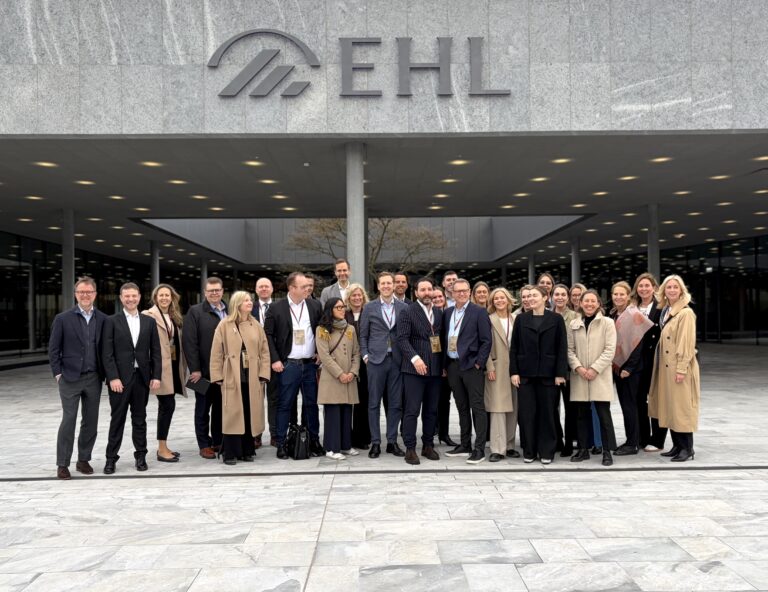
Novare Executive Program is designed for senior leaders who want to strengthen their leadership and future-proof their business. Through three modules in Stockholm and a Novare Discovery Tour participants gain the tools and insights needed to navigate new directions – and to develop both their business, their leadership and their network. The program starts once per year, next in February 2027. Read more here.
Photo: Sara Rossi
Curious to learn more? Contact us!
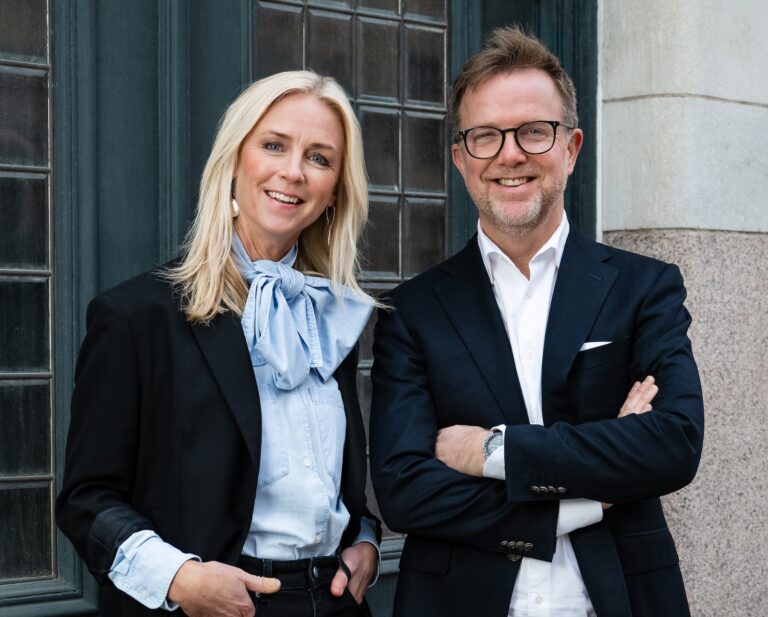
Petra Wigh and Lars Häggström are Program Directors for the Novare Executive Program and design tailored learning and leadership programs for executive teams and organisations.