Novare Discovery Tour 2026: Learnings from Lausanne
- 2 april 2026
- Artikel
How do you navigate geopolitics without a crystal ball? What does leadership look like when certainty is gone? And what happens when human interaction, not AI, becomes the true competitive edge?
These were some of the questions explored during the Novare Discovery Tour, part of the Novare Executive Program, where senior leaders come together to strengthen their strategic leadership and gain new perspectives on what is shaping tomorrow’s organisations.
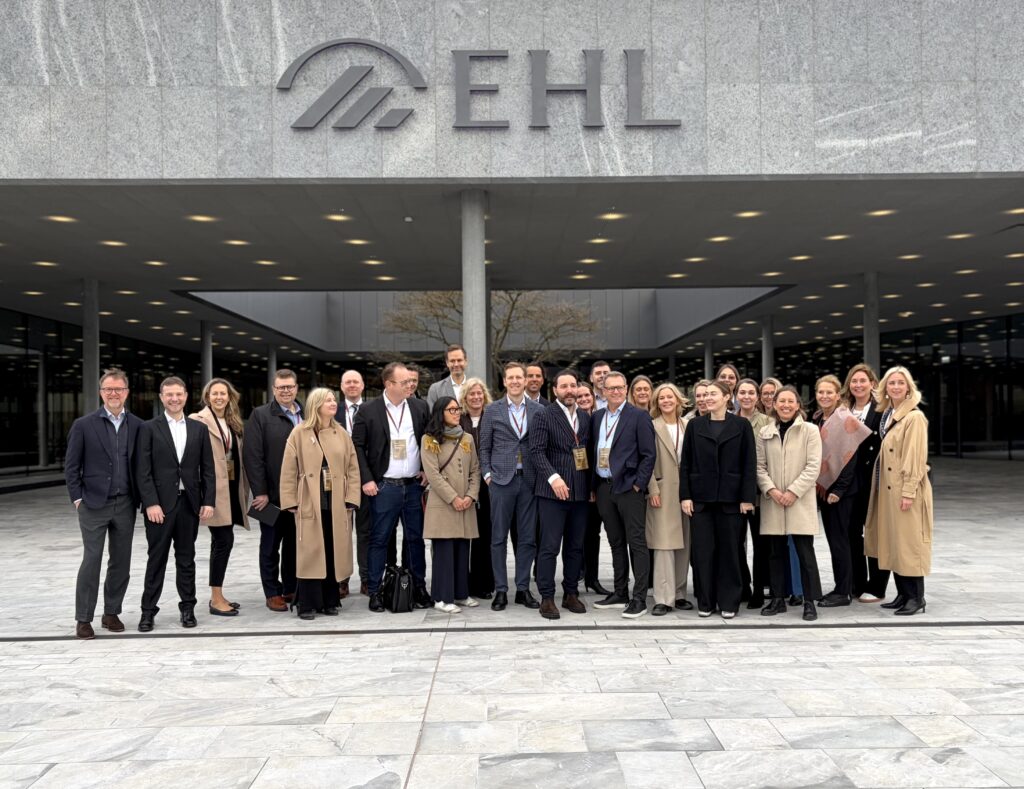
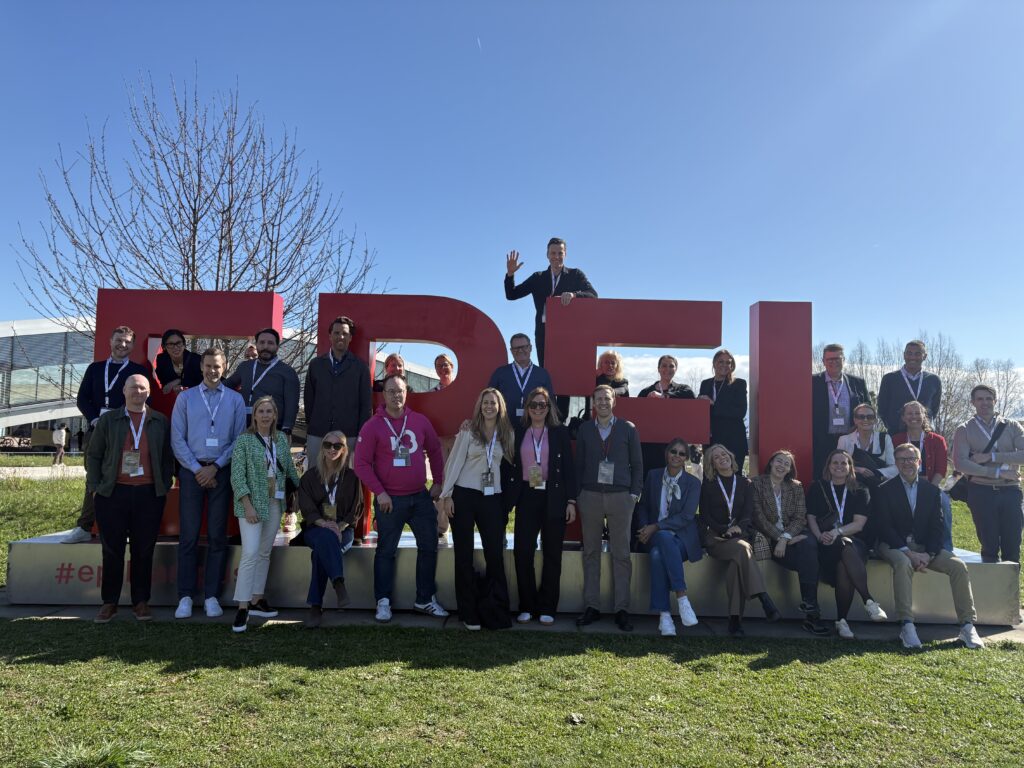
This year, the tour took us to Lausanne, Switzerland, where 30 participants spent a week engaging with professors and experts from IMD Business School, EPFL tech university and Hospitality Business School EHL, exploring insights from both academia and industry across geopolitics, leadership, technology and human interaction.
Navigating geopolitics by sorting signals from noise
As Simon Evenett, Professor of Geopolitics and Strategy at IMD, noted, “a crystal ball is not available” when it comes to geopolitical developments. Instead, Simon emphasised that organisations need to build capabilities to better interpret and respond to emerging signals.
A structured approach to geopolitical analysis can help leaders distinguish meaningful signals from short-term noise. This includes looking at events from different lenses, developing internal expertise, integrating geopolitical perspectives into strategic decision-making and creating organisational models that allow companies to continuously monitor global developments. In a reality where security priorities sometimes outweigh commercial considerations, such capabilities are becoming an essential part of strategic leadership.
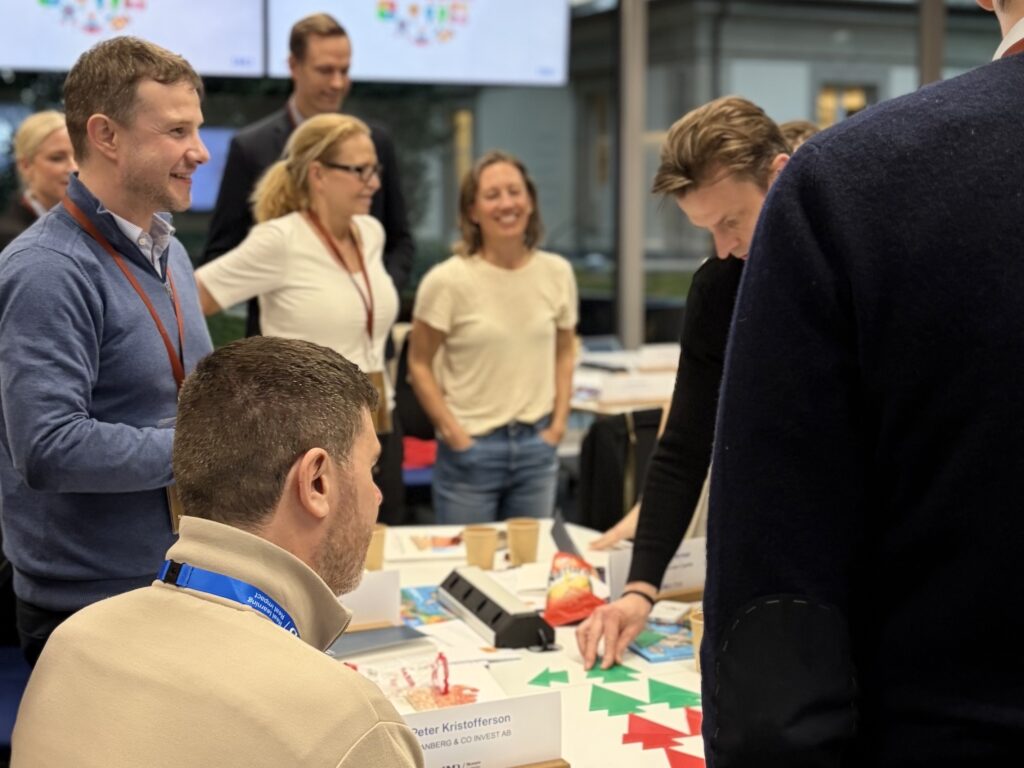
Leadership when assumptions no longer hold
Susan Goldsworthy, Professor of Leadership, Communications and Organisational Change at IMD, described today’s context as the “loss of the assumptive world”, where previously stable assumptions no longer hold. This sets the scene for much of what leaders are navigating today. As the world becomes more unpredictable, the point of control shifts inwards.
Susan focused on how leaders can take control by managing their own energy, fostering psychological safety, and shaping the conditions for teams and organisations to operate in the “play to thrive” space. She noted that these should not be considered “soft skills”.
Leadership is the hardest skill there is. It’s often diminished as a ‘soft skill’, but it’s not.
In this environment, leadership also becomes less about providing answers and more about creating the conditions for others to perform.
As Anna Fontcuberta-Morral, President of EPFL, expressed it:
“I don’t see myself at the top of an organisational chart. I am in the middle of a circle. My role is to provide the conditions for our excellent minds to do their work.”
From research to real-world impact
At EPFL, one of Europe’s most vibrant science and technology institutions, discussions highlighted how quickly technology is reshaping industries, from sovereign AI and language models to neuroscience and energy systems.
One example from the visit was Martin Schrimpf, whose research explores how to build a digital understanding of the human mind. As he described it, “Our goal is to create a digital brain to understand and treat the mind.” This could, for example, enable better ways to support people with dyslexia. At the same time, access to data remains a key bottleneck, and regulation is still lagging behind the pace of development.
Our goal is to create a digital brain to understand and treat the mind.
For many participants, the visit to EPFL offered a dense mix of ideas and perspectives. One participant described it as “like going into a boutique full of perfumes, so much stimuli and inspiration.”
Despite being known for its strong links between research and industry, a recurring challenge still came into focus: how to translate research into real-world impact, often referred to as the “valley of death.” Innovation alone is not enough. To create real value, it needs to be connected across disciplines, organisations and sectors.
Human interaction as a differentiator
Despite rapid technological progress, we kept coming back to the insight that as technology scales, human interaction matters more than ever.
At EHL, a hospitality business school that for more than 125 years has set global standards for excellence in hospitality education, discussions focused on how organisations can design meaningful experiences, and how customer experiences become the differentiator when other outputs become increasingly similar.
“We see hospitality as skills that can be deployed across many industries,” said Achim Schmitt, Dean at EHL.
So, what defines excellence in human interactions?
According to Meng-Mei (Maggie) Chen, Associate Professor of Marketing at EHL, it’s hospitality and relationships. We discussed hospitality not only as a service concept, but as a capability for employees and leaders. Hospitality can be understood as a combination of human traits such as care, empathy, courtesy, reciprocity and hosting. And, as outputs become increasingly similar, experience becomes the differentiator.
We see hospitality as skills that can be deployed across many industries.
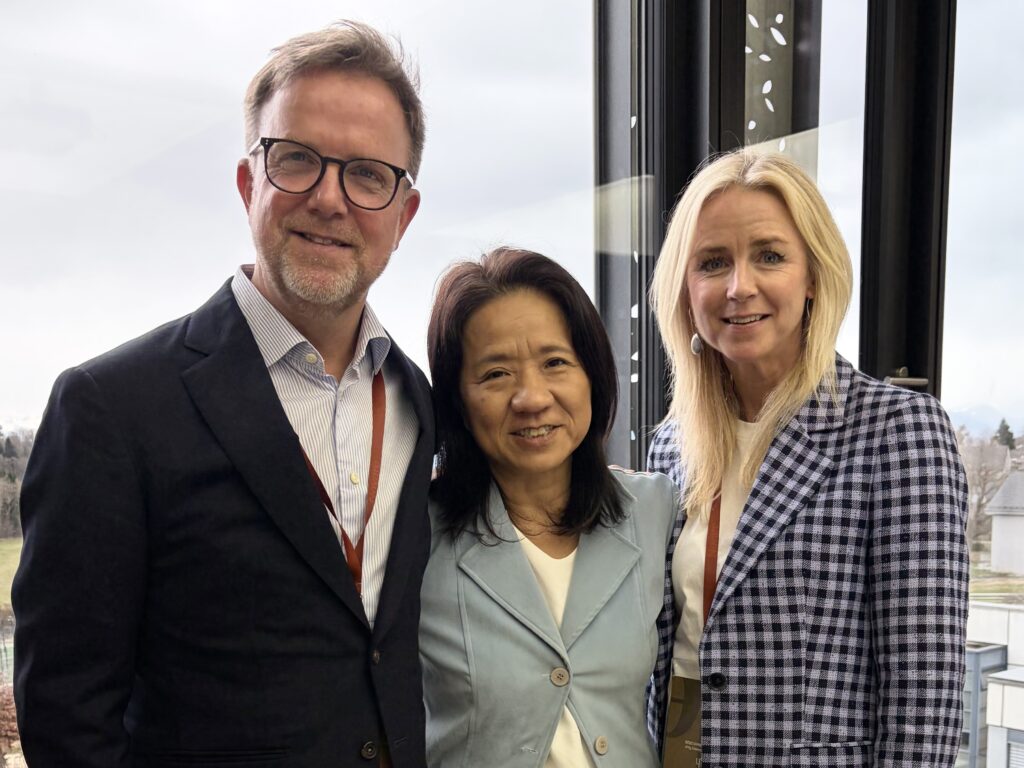
Wrapping up the Novare Discovery Tour 2026
Across the week, a few themes stood out: the need for collaboration across disciplines, the value of different perspectives, and the ability to turn insight into action in uncertain environments. While AI will continue to reshape how we work, human interaction will remain a foundation in both leadership and everyday life.
For many participants, the Discovery Tour brought new ways of thinking:
“I feel significantly better equipped after the trip and have strengthened my leadership toolbox with insights I can apply both in my role and within the organisation.”
“The program has provided concrete ideas to implement related to geopolitics, relationships, and how we build stronger collaboration, both internally and externally.”
I feel significantly better equipped after the trip and have strengthened my leadership toolbox with insights I can apply both in my role and within the organisation.
Thank you to all participants for open discussions, and to IMD, EPFL and EHL for sharing your expertise, research insights and know-how.
Curious to learn more? Contact us!